
ISO 11135 vs ISO 10993-7: Why Sterility Alone Is Not Enough

After being involved in the medical device industry for more than 10 years, I found that despite newer technologies and sterilization methods that have come up to so call replace Ethylene Oxide as a sterilization agent, it still remains as the number one choice for sterilization of medical devices. This is of course mostly due to its unique compatibility with heat or moisture sensitive materials or with medical devices with complex geometries.

The main reason there has been ongoing efforts to find a replacement for EO sterilization is that EO gas poses serious health and environmental issues. To be honest, I have encountered many people who worked in the medical device industry who have succumbed to cancer and other illnesses after working so long in an EO sterilization facility. Although the link was not actually proven, one does not help to wonder if getting cancer is related to their work, as they have been in the industry for more than 20 years. During that time, there was very little understanding of the danger of Ethylene Oxide and its link to cancer. Now that the International Agency for Research on Cancer or IARC has established EO as a group 1 carcinogen, stricter controls and regulations have been put in place both for operators and users of sterile medical device as the presence of toxic residuals such as ethylene oxide (EO) itself and ethylene chlorohydrin (ECH) may remain on or within the device after sterilization.
To address these dual concerns, manufacturers must comply not only with process-related requirements, but also with product safety standards. A validated EO sterilization cycle for their medical device does not automatically translate into a compliant or safe product. This remains a common misconception within the industry, often arising from confusion between two key standards which are ISO 11135 (Sterilization of health-care products — Ethylene oxide — Requirements for the development, validation and routine control of a sterilization process for medical devices) and ISO 10993-7 (Biological evaluation of medical devices Part 7: Ethylene oxide sterilization residuals). While ISO 11135 ensures that microorganisms are effectively eliminated through a validated sterilization process, ISO 10993-7 addresses what remains behind which are the toxic residuals I mentioned earlier.

Through my ongoing engagement with industry stakeholders, it has become increasingly apparent that while many are aware of the need for EO residual testing, not many are familiar with the existence of ISO 10993-7 standard itself. This disconnect can lead to situations where a sterilization process is technically validated from a microbiological standpoint but does not meet toxicological safety. Hence medical device manufacturers should know that ethylene oxide sterilization have two challenges which is ensuring the sterility of their products while simultaneously controlling EO residual levels.
ISO 11135 specifies the requirements for the development, validation, and routine control of EO sterilization processes. It ensures that sterilization cycles are capable of consistently achieving the required Sterility Assurance Level (SAL), supported by structured validation activities such as Installation Qualification (IQ), Operational Qualification (OQ), and Performance Qualification (PQ), alongside the use of biological indicators and process challenge devices.
On the other hand, ISO 10993-7 focuses on the biological safety of EO-sterilized devices by establishing acceptable limits for ethylene oxide (EO) and ethylene chlorohydrin (ECH) residues. Although the standard mentioned limits for Ethylene oxide to be 4mg per device and 9mg per device for Ethylene Chlorohydrin, this limit is calculated based on adult male population whose weight is 70kg. In my experience dealing with customers all over the world for EO Residual Testing, manufacturers have started to push for compliance on limits for children weighing 6kg and babies weighing 1.5kg. This shows an increasing awareness on the effects of Ethylene Oxide Residues towards the rest of the population. Moving forward, allowable limits for EO Residual will cover adult male and female, teenagers, children, babies and low birth weight babies in the updated version of ISO10993-7 which is set to be published in April 2026.

Together, these standards ensure that EO sterilization processes not only achieve effective microbial inactivation but also produce devices that are safe for patient use from babies to adults. As part of the sterilization validation activity, medical devices must be evaluated for EO residuals by using analytical chemistry. This is not a simple compliance check but a technically demanding exercise that requires a deep understanding of extraction science, analytical chemistry, product mechanism, product interaction with human body and material behaviour. Throughout my experience, I have encountered very simple medical devices like suture where residual extraction is very straightforward to complex multi component devices for bypass surgeries.
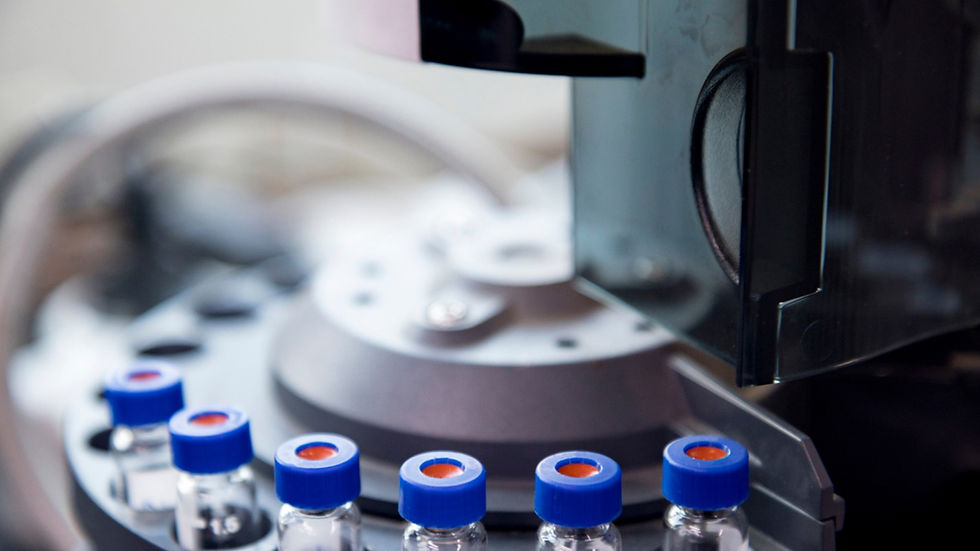
EO Residual testing typically involves extracting the EO residuals from the device under controlled conditions designed to simulate worst-case EO release. The extracts are then analyzed using gas chromatography (GC) to quantify EO, ECH, and EG concentrations. This process can take from 3 days up to a month depending on the complexity of the device and the method of extraction chosen.
However, the analytical challenge extends far beyond instrumentation. Polymeric materials, multilayer systems, and enclosed spaces can retain EO differently, making it critical to design extraction conditions that are both representative and sufficiently aggressive to ensure complete recovery. Without this, there is a real risk of underestimating residual levels and in turn overestimating product safety.
The extraction parameters must be scientifically justified, and analytical sensitivity must align with the allowable limits for EO residuals mentioned in ISO 10993-7 or as per requested. In practice, generating reliable data requires not only the right instrumentation, but also a controlled testing environment, validated methods, and a level of analytical discipline that must be reflected by ISO/IEC 17025-accredited laboratories such as SaniChem Resources.
Equally important is the interpretation of results. Residual data cannot be assessed in isolation as it must be compared against device use, duration of patient contact, and allowable exposure limits. This is where analytical data meets toxicological evaluation and where the quality of the data directly impacts the strength of the regulatory justification.
In many cases, the efficiency of EO validation is shaped by how quickly and reliably this data can be generated. Delays in residual testing, or inconsistent analytical results, can slow down validation timelines and complicate decision-making during cycle optimization. That is why it is recommended to alert in advance of incoming samples and present your testing plan to laboratories so that they can allocate slots for their testing which will allow ample time for decision-making if any issues arise. Problems that could occur include sample shipment issues, instrument breakdown, non-compliance towards allowable limits and many more. Therefore, when the results do not comply you could immediately adjust your process especially in terms of product aeration in order to meet the allowable limits. However, when the samples were delivered weeks before the deadline, it enabled a much tighter feedback loop between you and the laboratory team.
From a process standpoint, EO residual testing becomes more than a regulatory requirement as it becomes a tool for optimization. Elevated residual levels may indicate insufficient aeration, overly aggressive sterilization conditions, or material compatibility issues. EO sterilization, therefore, should not be viewed as a single process step, but as a system that extends beyond microbial inactivation to include chemical safety and patient risk. ISO 11135 demonstrates that your device is sterile while ISO 10993-7 demonstrates that it is safe. And from the laboratory’s standpoint, it is the robustness, reliability, and timeliness of residual testing that ultimately bridges the gap between the two standards, turning a validated process into a truly compliant and market-ready product.


Comments